Last updated 2026-08-18
TL;DR
You don't need a pilot license or a state T-hangar condo license. California treats a T-hangar condo as a real estate subdivision, so before you sell any unit, the Department of Real Estate must issue a public report. You also need a recorded condominium plan, a tentative map, local permits, and a ground lease approved by the airport sponsor. Timing commonly runs 12 to 24 months.
What is a T-hangar condo in California, exactly?
A T-hangar condo in California is a hangar unit you own inside a common interest development at an airport. You usually do not own the dirt under the hangar. The airport sponsor keeps the ground and leases it under a long-term ground lease. California Civil Code Section 4000 makes the Davis-Stirling Common Interest Development Act apply to condominium projects, including hangar projects [1].
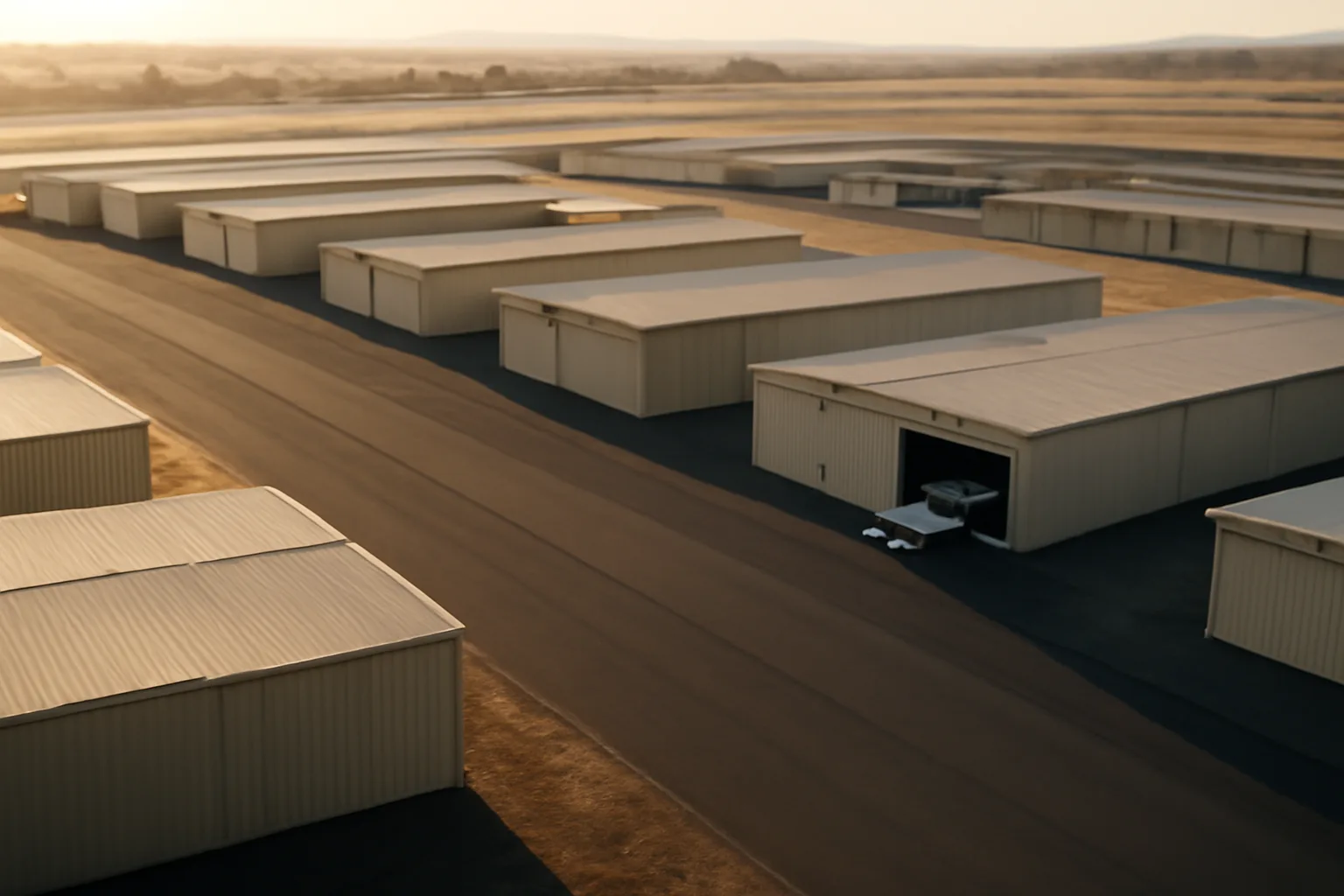
A T-hangar is the familiar row of box hangars, each with its own door. Unit boundaries are vertical and horizontal, not side-by-side lots. The condominium plan measures those boundaries under Civil Code Section 4125 [2].
California has about 250 public-use airports in the current FAA national plan, so land economics run from remote high-desert strips to coastal municipal airports where waiting lists are real [9]. The legal shape is the same everywhere, but the money and sponsor behavior are not.
Do you need a license for a T-hangar condo in California?
No. California does not issue a state T-hangar condo license, and the FAA does not license hangar condos. The paper that operates like a license is the public report from the California Department of Real Estate. Business and Professions Code Section 11010 says it is unlawful to sell or lease lots in a subdivision without first obtaining a public report from the Department of Real Estate [3]. That is the gate.
You also need a building permit from the local city or county, plus the airport sponsor's approval. But there is no separate aviation license. The closest thing to a license is the DRE public report number, and that is a seller document, not an owner document.
How much does a T-hangar condo cost in California?
Nobody publishes a statewide T-hangar condo price for California, and I will not invent one. What you pay splits into two layers. The development layer includes survey, environmental review, tentative map, condominium plan, DRE public report, and California legal fees. That can run from the high five figures to mid six figures before you sell one unit, depending on the site and environmental triggers.
The unit layer is what a buyer pays. At a rural public-use strip, a basic T-hangar condo can list in the high five figures. At a coastal or metro airport, expect mid six figures and a waiting list. Always confirm the current DRE public report filing fee directly with DRE because the fee schedule moves [7].
| Cost layer | Typical driver | Confirm with |
|---|---|---|
| Development | Survey, environmental review, map, DRE filing, legal | City or county, DRE |
| Unit purchase | Location, hangar size, ground rent, HOA reserve | Airport sponsor, comparable sales |
| Ongoing | HOA dues, ground rent, property tax, insurance | Board, assessor, broker |
How long does a T-hangar condo take in California?
Plan for 12 to 24 months from signed ground lease option to first legal sale. The longest paper is often the tentative map. California Government Code Section 66452.6 says, "The approval or conditional approval of a tentative map shall expire 24 months after its effective date," which sets the rhythm [5]. Airport land use commission review under Public Utilities Code Section 21676 can add 60 days if your project falls inside an airport influence area [6].
The DRE public report has no statutory clock. The agency can take a few months, and a back-and-forth rewrite can add more. Construction is separate. If you are doing ground-up T-hangars, add the build window. No timing is guaranteed, and a sponsor board vote can add months.
What is the real California paper path, step by step?
The paper path is not a single form. Start with the airport sponsor. You need a written ground lease or option that allows condominium subdivision. Then record a condominium plan under Civil Code Section 4125 [2]. Then file a tentative map with the city or county under the Subdivision Map Act [4]. Then file a Notice of Intention with DRE and wait for a final public report [3]. Only after that do you sign purchase contracts and close units.
For the license document set alone, see California's license paper walkthrough. For the permit sequence in a similar western state, Colorado's process shows the same broad order even though local details differ.
What does the California Department of Real Estate public report require?
DRE's public report is the state's consumer protection review. You file a Notice of Intention, preliminary title report, proposed CC&Rs, condominium plan, operating budget, management plan, and sales materials. DRE reviews the title and documents, checks that common areas and reserves are described, and then issues a preliminary public report. The final public report is what lets you legally offer units [3][7].
Without it, a signed purchase contract is voidable under California law. Do not take reservations before the final report unless your DRE counsel tells you in writing, because deposit rules are strict. This is the step most out-of-state developers underprice. The DRE review is not a rubber stamp.
How do airport leases and FAA grant assurances work in California?
At most California airports, the airport sponsor owns the ground. The condo buyer gets a leasehold condominium, not a fee simple lot. If the airport has taken FAA grants, FAA Order 5190.6B requires the sponsor to charge fair market value for airport land and use the revenue for the airport [8]. That ground rent is an FAA compliance item, not a paperwork line.
The sponsor cannot give away the land or underprice the lease in a way that violates grant assurances. Unit owners should read the lease term, rent escalation, and renewal rights before buying. For comparison, see How Texas handles airport ground lease issues.
What local permits and airport land use reviews apply?
Your city or county issues the actual construction permits for footings, hangar door, electrical, and fire access. If the airport is inside a county airport land use commission influence area, the ALUC reviews compatibility under Public Utilities Code Section 21676 and can take 60 days [6]. Many airport sponsors also have minimum standards that restrict commercial maintenance, fueling, or flight school operations inside a condo hangar. FAA Advisory Circular 150/5190-7 says airports should set minimum standards for commercial aeronautical activities [10].
Confirm what the board will allow before you buy or build. A hangar that cannot legally run the use you want is a bad purchase.
What goes in the condominium documents under Davis-Stirling?
Under Davis-Stirling, you record a declaration of covenants, conditions, and restrictions, a condominium plan, and map. Civil Code Section 4125 defines the condominium plan as the document that marks unit boundaries by diagrams and legal descriptions [2]. The declaration creates the association, assessments, maintenance duties, and use restrictions.
For T-hangar condos, the plan must show airspace boundaries, door clearance, and common drive lanes. A bad unit description becomes a title defect. Use a California condominium lawyer. THangarPath's $199 one-time FAA Lease + Condo-Doc Kit is a starting paper set to bring to your California counsel and the airport sponsor; it does not replace a DRE public report or a California-specific condominium plan.
What do first-year operations actually look like?
First-year operations are less about flying and more about what the board requires. You will typically produce proof of insurance naming the airport sponsor and association, register your aircraft or tenant with the board, and pay monthly HOA dues plus ground rent. The airport may require annual inspection of hangar door, fire extinguisher, and no living in the unit. Some sponsors allow only active aircraft storage, not vehicle parking or workshop use.
California does not set a uniform T-hangar ops code. The private documents do. Read the minimum standards before the first payment. Confirm with the relevant board and your insurer. A quick comparison across states, like Alabama's ground lease quirks, shows how much the board's discretion matters.
What are the property tax and HOA realities in California?
Property tax is a real line item but amounts depend on the county. In a leasehold condominium, the unit owner pays tax on the condominium interest, and the airport sponsor may have a possessory interest tax on the lease. Some counties bill the owner separately; some fold it into ground rent. Do not rely on a generic rate. The statewide base is 1 percent of assessed value plus local bonds, but that does not mean your bill will be simple. Ask the county assessor before closing.
For ongoing cost comparisons, see Tennessee's real cost breakdown. The HOA is separate and must fund reserves under Davis-Stirling. Underfunded reserves will show up in DRE review and special assessments later.
What can kill a California T-hangar condo deal?
Three things kill more California hangar condo deals than anything else. First, the airport sponsor says yes and then refuses to subordinate the ground lease to a lender. Second, DRE rejects the budget for underfunded reserves. Third, environmental or airport land use review drags past the map life.
Also watch for FAA grant assurances that block selling units because the land release never happened. Before you spend money on site work, get the sponsor's board resolution or letter authorizing condominium subdivision. Then get a California title report. Then get the map and DRE filing going. If the sponsor is silent on the ground lease, the deal is not real yet. THangarPath's $199 kit can help you carry the right FAA lease and condo-doc set into those first meetings, but it is not legal advice.
Frequently asked questions
Do I need a license to own a T-hangar condo in California?
No. California does not issue a T-hangar condo license. To sell units, the developer needs a final public report from the Department of Real Estate under Business and Professions Code 11010. Owners need no pilot license, but the airport sponsor may require proof of aircraft registration or an approved tenant. Confirm with the board.
How much does a T-hangar condo cost in California?
No state price list exists. Development costs can run high five to mid six figures. Unit prices range from under $100,000 at remote strips to over $400,000 at coastal airports. Confirm specific numbers with the airport sponsor, recent comparable sales, and the current DRE filing fee.
How long does a T-hangar condo take in California?
Usually 12 to 24 months for paper before close. Tentative map approval has a 24-month life under Government Code 66452.6, ALUC review can add 60 days, and DRE has no statutory clock. Construction time is separate and varies by site.
Does California require a DRE public report for a T-hangar condo?
Yes, before offering any unit for sale. Business and Professions Code 11010 makes it unlawful to sell or lease lots in a subdivision without a final public report from the Department of Real Estate. The public report is the state's consumer protection document.
Can I sell a T-hangar condo before the DRE final report?
No. Pre-sale deposit activity before the final public report is restricted. A signed purchase contract without a final public report is voidable. Get California DRE counsel before accepting any money.
What is the ground lease in a California T-hangar condo?
The airport sponsor usually keeps the land and leases it under the units. Unit owners get a leasehold condominium. FAA grant rules require fair market value rent and airport use of revenue, so the lease is both a real estate and compliance document.
Are T-hangar condo units real property in California?
Yes. A condominium interest is real property under California Civil Code 4000 and can be separately assessed, financed, and transferred, subject to the ground lease and recorded CC&Rs.
Can I run a maintenance shop from a T-hangar condo in California?
Maybe not. Airport minimum standards often restrict commercial maintenance, fueling, or flight school operations inside a condo hangar. Check the airport sponsor's minimum standards before buying or building.
What documents do I need to record in California?
A condominium plan under Civil Code 4125, a declaration of CC&Rs, a tentative map under Government Code 66424, and a DRE final public report before sales. Local building permits and airport sponsor approval come first.
Does California require airport land use commission review?
Only if the project falls within an airport land use commission influence area. Review can take 60 days under Public Utilities Code 21676. The local county ALUC evaluates compatibility with airport operations.
Can I finance a T-hangar condo in California?
Some lenders finance leasehold condominium units if the ground lease term exceeds the loan term and the FAA compliance items are clean. Expect conservative underwriting and a higher rate than a single-family home.
Do I need an FAA license for a T-hangar condo in California?
No. The FAA does not license hangar condominiums. If the airport took FAA grants, the airport sponsor must comply with FAA grant assurances, but the individual buyer does not file an FAA license.
Sources
- California Civil Code Section 4000: Davis-Stirling Common Interest Development Act applies to condominium projects in California.
- California Civil Code Section 4125: A condominium plan defines unit boundaries, diagrams, and legal descriptions.
- California Business and Professions Code Section 11010: It is unlawful to sell or lease lots in a California subdivision without a DRE public report.
- California Government Code Section 66424: The Subdivision Map Act defines subdivisions, including condominium projects, and requires a tentative map.
- California Government Code Section 66452.6: A tentative map approval expires 24 months after its effective date.
- California Public Utilities Code Section 21676: Airport land use commissions review plans within 60 days in airport influence areas.
- FAA National Plan of Integrated Airport Systems, 2025-2029: The current NPIAS lists about 3,308 U.S. public-use airports, including about 250 in California.
- FAA Advisory Circular 150/5190-7, Minimum Standards for Commercial Aeronautical Activities: Airports should set minimum standards for commercial aeronautical activities, which can restrict uses inside hangar condos.