Last updated 2026-08-18
TL;DR
Starting a T-hangar condo in Utah requires a ground lease from the airport sponsor, a Declaration of Condominium filed under Utah Code 57-8, and FAA review if federal grant money touched the airport. No state aviation license is required. Budget $30,000 to $80,000 in legal and formation costs before construction, and expect 12 to 24 months from concept to first unit closing.
What exactly is a T-hangar condo and why does Utah matter here?
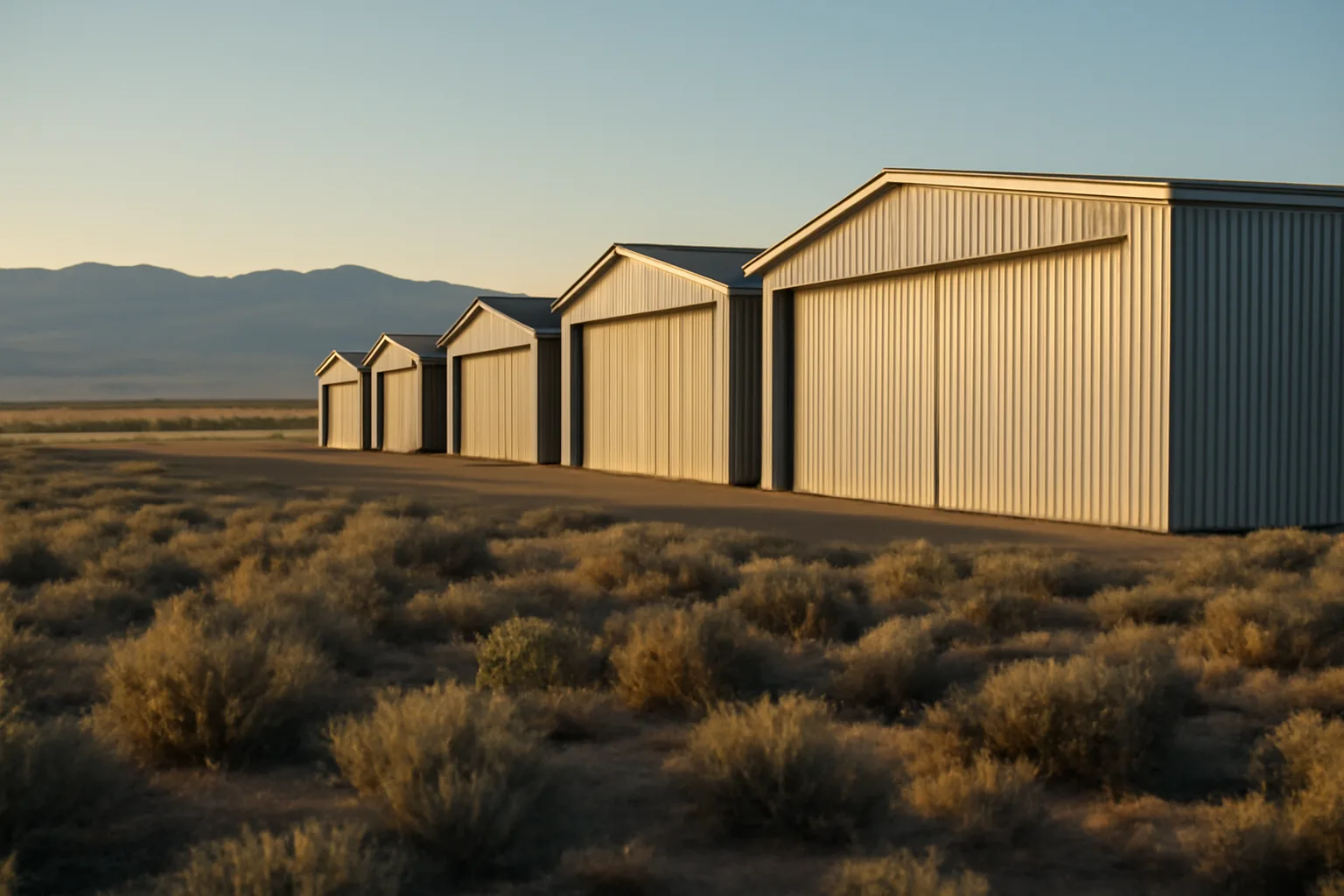
A T-hangar condominium is an aviation structure where individual hangar bays are sold as fee-simple units under a condo regime, while the land beneath the building sits on a long-term ground lease from the airport sponsor. The buyer owns the airspace unit. The airport owns the dirt. That split is the legal knot you have to untie before a single concrete slab gets poured.
Utah works well for this because it has a clean condominium statute (Utah Code Title 57, Chapter 8) and a handful of general aviation airports with real demand and thin hangar supply. Salt Lake City Executive, Ogden Hinckley, Provo Municipal, and several smaller reliever airports have all seen hangar waitlists stretch past two years recently. That supply gap is the economic signal that makes a T-hangar condo project pencil out.
The state does not issue a special "T-hangar condo license." What you are actually assembling is a stack of four or five distinct approvals: an airport ground lease, FAA coordination, a recorded Declaration of Condominium, a Utah HOA registration, and, if you plan to sell units to the public, a subdivision or condominium disclosure filing. Each layer has its own clock. None of them run on your schedule.
Do you need a license for a T-hangar condo in Utah?
No single license called a "T-hangar condo license" exists in Utah or at the federal level. When people ask this, they usually mean one of three things: a business license, a real estate development approval, or an FAA operating certificate. None of those apply the way you might expect.
A Utah business license is a simple city or county registration, typically $50 to $200 per year, and has nothing to do with aviation. You need one if your LLC or HOA is conducting business in the jurisdiction, but it is not aviation-specific.
A real estate development approval is the one that actually bites. Under Utah Code 57-8-12, a condominium project must record a Declaration of Condominium with the county recorder before any unit can be conveyed. [2] That declaration must include a plat, a description of units, the allocated interests, and the bylaws. This is a legal recording, not a license, but skip it and you cannot close on a single unit.
FAA involvement kicks in under 49 U.S.C. 47107 whenever the airport received federal Airport Improvement Program (AIP) grants. The grant assurances the airport sponsor signed require that any long-term lease or revenue-generating arrangement be at fair market value and consistent with the airport's approved layout plan (ALP). [3] That does not stop you from building, but it does mean the airport sponsor cannot sign your ground lease without checking with their FAA regional office first, and the FAA review can take months.
So: no license, but three separate legal gates, and each one can hold up the entire project.
How does Utah's condominium law apply to airport hangars?
Utah's Condominium Ownership Act (Utah Code Title 57, Chapter 8) was written for residential buildings, but it applies to commercial and industrial condominiums too, including aviation hangars. [2] The statute does not distinguish by use type. If you are selling individually titled airspace units with common elements, you are a condo project under Chapter 8.
The key document is the Declaration of Condominium. It has to describe each unit by number and approximate square footage, allocate common element interests (typically by unit floor area), establish the HOA, and define the maintenance split between individual owners and the association. For an airport project, you also need language that subordinates unit ownership to the airport ground lease, because if the ground lease terminates, the condo regime terminates with it. That subordination clause is something a lot of generic condo attorneys miss, and getting it wrong creates a title insurance problem down the road.
Utah also requires a Public Offering Statement under Utah Code 57-11 (the Utah Uniform Land Sales Practices Act) if you are offering more than five units to the public. [4] That filing goes to the Utah Division of Real Estate and involves a registration fee plus a waiting period before you can accept binding purchase contracts. If you are doing a small project of four units or fewer sold to people you know, you may be able to stay under that threshold, but confirm with a Utah real estate attorney before you assume you qualify.
One detail worth knowing: Utah Code 57-8-7.1 allows a condominium to be built in phases, which can help cash flow if you are not sure all units will sell quickly. [2] You record the first phase, sell those units, then record subsequent phases as demand justifies.
What does the FAA ground lease process actually look like?
Every public-use airport in Utah that accepted AIP money (which is almost all of them) operates under FAA grant assurances. Grant Assurance 22 requires that the airport sponsor make its facilities available on "reasonable terms and without unjust discrimination" to all aeronautical users. [3] Grant Assurance 24 requires that revenues generated at the airport be used for airport purposes. Together, those two assurances mean the airport cannot give your group a sweetheart lease, and cannot block a legitimate aeronautical use either.
The practical consequence: your ground lease must be at fair market rent, with a term long enough to make the condo financing work (most lenders want at least 30 years beyond the loan maturity, so a 40- to 50-year lease is common), and it needs FAA sign-off if the term or structure is unusual. FAA Advisory Circular 150/5190-6, "Exclusive Rights at Federally Obligated Airports," lays out what lease terms are and are not acceptable. [5]
The Utah Division of Aeronautics can be a useful first contact. They do not approve leases, but they know which airport managers are experienced with condo projects and which ones are not. Starting with a call to their office at the Utah Department of Transportation before you hire attorneys is free and can save you from picking an airport where the sponsor is not interested.
Expect the lease negotiation to take three to nine months. Airport boards meet monthly or quarterly. If your proposal requires a board vote, one missed meeting can cost you 30 to 90 days. Build that into your timeline.
How much does a T-hangar condo cost in Utah?
Costs fall into three buckets: formation (legal and filing), construction, and carrying costs while approvals move. I will focus on formation costs here because construction costs depend entirely on your design and contractor bids.
Formation costs in Utah typically run as follows:
| Cost item | Typical range | Notes |
|---|---|---|
| Aviation attorney (lease + docs) | $8,000 to $25,000 | Higher if FAA negotiation is needed |
| Real estate attorney (condo docs) | $5,000 to $15,000 | Includes Declaration, bylaws, plat review |
| County recorder filing fees | $100 to $500 | Per document; Utah charges by page |
| Utah Division of Real Estate filing (if >5 units) | $500 to $2,000 | Based on aggregate offering price [4] |
| Survey / plat preparation | $3,000 to $10,000 | Required for condo recording |
| Title insurance (unit policies at closing) | $500 to $1,500 per unit | Paid by buyers typically |
| HOA formation (articles, initial meetings) | $1,000 to $3,000 | CPA and attorney time |
| Contingency | 15 to 20% of above | Delays cost money |
So a realistic formation budget before construction is $20,000 to $55,000. Add construction and you are looking at $250,000 to $600,000 for a modest four- to eight-unit project, depending on bay size and finish level. Single-bay T-hangar construction costs in the Mountain West have been running $60,000 to $120,000 per bay, though those numbers shift with steel prices. [7]
Unit sale prices in Utah have ranged from $125,000 to $350,000 per bay in recent transactions, with location and bay size driving the spread. Nobody has clean public data on this; those figures come from county assessor records and broker listings rather than any organized survey.
If you want a document kit that covers the FAA lease template and condo-doc framework before you engage attorneys, THangarPath offers a one-time $199 kit at /start. That is not a replacement for legal counsel, but it gives you a starting draft so your attorney is editing rather than drafting from scratch, which cuts billable hours.
How long does starting a T-hangar condo in Utah take?
Twelve to twenty-four months is the honest range. Some projects run longer. A few run faster if the airport sponsor is experienced and motivated. Nobody who has done one of these will promise you anything under a year.
Here is roughly how the timeline stacks:
| Phase | Typical duration | What can slow it |
|---|---|---|
| Airport sponsor conversations and board approval | 2 to 6 months | Board meeting frequency, sponsor's FAA history |
| FAA regional review (if needed) | 2 to 6 months | Complexity of lease, ALP amendment required |
| Ground lease negotiation and execution | 1 to 3 months | Runs parallel to FAA review ideally |
| Condo document drafting and county recording | 1 to 3 months | Surveyor availability, recorder backlog |
| Utah Division of Real Estate registration (if needed) | 1 to 2 months | Complete application required before clock starts |
| Construction | 4 to 10 months | Steel lead times, contractor availability |
| Unit closings | 1 to 2 months | Title, lender, buyer coordination |
The phases do not run purely in sequence. You can draft condo documents while the lease is being negotiated. You can begin the Division of Real Estate registration while construction is underway. But you cannot record the Declaration until you have the ground lease executed, and you cannot close on units until the Declaration is recorded. [2] Those two hard dependencies are where projects stall.
Utah's county recorder offices vary in turnaround. Salt Lake County tends to be faster than some rural counties. Call ahead and ask for current recording turnaround times before you promise buyers a closing date.
What entity structure should you use in Utah?
The standard structure for a T-hangar condo project is a Utah LLC as the developer entity (which holds the ground lease and manages construction) with a separate Utah nonprofit HOA formed under Utah Code 16-6a (the Utah Revised Nonprofit Corporation Act) to own and manage the common elements after unit sales are complete. [8]
The developer LLC dissolves or steps back after the last unit closes. The HOA takes over. That clean separation matters for liability and for the FAA, which wants to see that the airport ground lease has a clear, ongoing responsible party.
Some small projects try to collapse the developer and HOA into one entity to save formation costs. This works sometimes, but it complicates the transition after all units are sold and can create conflicts of interest during the sales period. A real estate attorney familiar with Utah condo law will tell you whether the single-entity approach is viable for your specific project size.
For a project with outside investors, you may also need a private placement memorandum if you are raising money from non-managing members. That triggers securities law considerations under the Utah Uniform Securities Act (Utah Code 61-1) and possibly federal Regulation D under the Securities Act of 1933. [9] Do not skip this step. Selling membership interests in a development LLC without proper disclosures is a securities violation regardless of how informal the arrangement feels.
How do you pick the right Utah airport for a T-hangar condo project?
Not every Utah airport is a good fit. The ones most likely to work have a supportive airport manager and board, available land on the airport layout plan, a history of accepting private development, and enough based aircraft to generate unit demand.
Utah has 44 public airports. The Utah Division of Aeronautics publishes an airport directory with contact information and basic facility data. [10] Start there. You want an airport with at least 150 to 200 based aircraft to support a project of four or more units. Smaller airports can work for tiny two-unit projects if you have committed buyers before you break ground.
Ask the airport manager three direct questions before you spend money on attorneys: Does the current Airport Layout Plan have land available for new private hangar development? Has the board approved similar projects in the past? Is the airport under any FAA compliance review or grant assurance dispute right now? A yes on the third question is a hard stop until the dispute resolves.
Avoid airports where the sponsor is a city government with a contentious council or where there is active litigation over airport land use. Both conditions extend timelines unpredictably and in ways you cannot control.
What are the common mistakes people make starting a T-hangar condo in Utah?
The biggest one: hiring a general real estate attorney who has never done an airport project. Airport ground leases have aeronautical easement language, FAA subordination clauses, and reversion provisions that a residential condo attorney will miss. The documents that result look fine but create title insurance problems and lender refusals when buyers try to finance units.
Second mistake: assuming the FAA review is quick. If the airport needs an Airport Layout Plan amendment to show your new hangar footprint, the ALP amendment process at the FAA Northwest Mountain Region can take six to twelve months on its own. [3] Projects that do not check the ALP first get surprised by this.
Third mistake: underestimating county recorder requirements. Utah counties vary in what they require for a condominium plat. Some require a licensed land surveyor to certify specific elements. Getting this wrong means a rejected recording and another trip to the surveyor.
Fourth mistake: selling units before the Declaration is recorded. In Utah, you cannot convey a condo unit without a recorded Declaration. [2] Accepting non-refundable deposits before recording creates legal exposure. Use a reservation agreement with a refundable deposit and have your attorney draft it carefully.
For help structuring the lease and condo documents before your attorney engagement, the THangarPath kit at /start provides FAA lease templates and condo-doc frameworks that your attorney can review and adapt. Confirm any variable fees and terms directly with the relevant board and agencies.
How do Utah T-hangar condo rules compare to neighboring states?
Utah's condominium statute is broadly similar to those in Colorado and Arizona, which also draw on the Uniform Condominium Act framework. [11] Nevada uses a different structure that allows more flexibility in phased projects. Idaho's condo law is older and less detailed, which creates some ambiguity for commercial projects.
The FAA layer is identical across all states because federal grant assurances are federal. The airport-level process does not change based on which state you are in.
Where Utah has a practical advantage: the Utah Division of Real Estate is generally considered responsive, and its public offering statement review is reasonably predictable compared to California's, which runs through the Department of Real Estate and can take significantly longer for projects with unusual structures. [12]
If you are comparing states for where to do your first project, Utah sits in the middle of the difficulty range. It is not as simple as Arizona, where the condo statute is well-tested for commercial uses, but it is far less complex than California. Colorado has similar terrain.
For context on how neighboring states structure their processes, see how to start T-hangar condo in Colorado and how to start T-hangar condo in Arizona.
What does the step-by-step checklist look like for a Utah project?
Here is the sequence experienced practitioners actually follow, stripped of the wishful thinking:
1. Identify your target airport and confirm available land on the ALP. 2. Meet with the airport manager and get informal board support before spending money. 3. Engage an aviation attorney experienced with FAA grant assurance compliance. 4. Commission a feasibility study: based aircraft count, competitor hangar pricing, unit absorption rate. 5. Negotiate the ground lease term, rent, and escalation with the airport sponsor. 6. Submit the lease for FAA regional review if the airport manager indicates it is needed. 7. Engage a Utah real estate attorney to draft the Declaration of Condominium, bylaws, and plat. 8. File the Declaration with the county recorder after the lease is executed. 9. Determine whether your offering size triggers the Utah Division of Real Estate registration. 10. File the public offering statement if required, and wait for the review period to clear. 11. Begin construction. 12. Open unit escrows and close sales. 13. Transition HOA governance to unit owners after the last unit closes.
Steps 5, 6, and 7 overlap in practice. Steps 9 and 10 happen while construction is underway. The checklist is sequential in logic but not always in calendar time.
For those starting from scratch on documents, reviewing how to start T-hangar condo in Alabama and how to start T-hangar condo in Alaska shows how other states handle the same FAA layer, since that part of the process is identical regardless of state.
Frequently asked questions
Do you need a license for a T-hangar condo in Utah?
No aviation-specific license exists for T-hangar condos in Utah. What you actually need is a recorded Declaration of Condominium under Utah Code 57-8, a negotiated airport ground lease, FAA coordination if the airport received federal grants, and a Utah Division of Real Estate public offering statement if you are selling more than five units to the public. A basic city or county business license is also required but is unrelated to aviation.
How much does it cost to start a T-hangar condo in Utah?
Formation costs alone (legal fees, filing fees, survey, HOA setup) typically run $20,000 to $55,000 before any construction begins. Add construction at $60,000 to $120,000 per bay and total project costs for a four- to eight-bay project often reach $250,000 to $600,000. Unit sale prices in Utah have ranged from $125,000 to $350,000 per bay based on county assessor records and broker listings.
How long does it take to start a T-hangar condo in Utah?
Twelve to twenty-four months is the realistic range from first airport contact to unit closings. The hard dependencies are: you cannot record the Declaration until the ground lease is signed, and you cannot close on units until the Declaration is recorded. FAA regional review, airport board meeting schedules, and Utah county recorder turnaround times are the most common sources of delay.
Which Utah airports are good candidates for T-hangar condo projects?
Airports with 150 or more based aircraft, available land on the current Airport Layout Plan, and a board that has approved private hangar development before are your best targets. Salt Lake City Executive, Ogden Hinckley, Provo Municipal, and St. George Regional are frequently cited, but confirm current land availability directly with each airport manager. The Utah Division of Aeronautics publishes contact information for all 44 public airports in the state.
Does Utah's condominium law cover aviation hangars?
Yes. Utah Code Title 57, Chapter 8 (the Condominium Ownership Act) applies to all condominium projects regardless of use type, including commercial and industrial hangars. It does not distinguish between residential and aviation uses. The Declaration of Condominium, unit plat, allocated interests, and HOA formation requirements apply exactly as they do for residential condo projects.
What does the FAA require for a T-hangar condo ground lease?
If the airport received AIP federal grant money, FAA Grant Assurance 22 requires the ground lease to be on reasonable terms without unjust discrimination, and Assurance 24 requires airport revenues to serve airport purposes. This means the lease must be at fair market rent and consistent with the Airport Layout Plan. FAA Advisory Circular 150/5190-6 details acceptable lease structures. Lease terms of 40 to 50 years are common to satisfy lender requirements.
Does a T-hangar condo project in Utah require a public offering statement?
If you are offering more than five units to the public, Utah Code 57-11 (the Utah Uniform Land Sales Practices Act) requires a Public Offering Statement filed with and reviewed by the Utah Division of Real Estate. The review period must clear before you can accept binding purchase contracts. Projects of five or fewer units sold to identified buyers may fall below the threshold, but confirm with a Utah real estate attorney before assuming you qualify.
What entity structure works best for a Utah T-hangar condo?
The standard structure is a Utah LLC as the developer entity holding the ground lease and managing construction, paired with a separate Utah nonprofit HOA formed under Utah Code 16-6a to own common elements after all units sell. The developer LLC steps back after the last closing. If you are raising money from non-managing investors, you likely need a private placement memorandum under the Utah Uniform Securities Act and possibly federal Regulation D.
Can you sell T-hangar condo units before construction is finished in Utah?
You can take reservations and deposits, but the Declaration of Condominium must be recorded before you can legally convey any unit. You cannot record the Declaration until the ground lease is executed. Use a reservation agreement with a refundable deposit during the pre-recording period, and have a Utah real estate attorney draft it. Accepting non-refundable deposits before recording creates legal exposure under Utah condo law.
How does a phased T-hangar condo project work under Utah law?
Utah Code 57-8-7.1 permits phased condominium development, which lets you record Phase 1, sell those units, then add Phase 2 as demand warrants. Each phase requires its own declaration amendment and county recorder filing. This approach helps cash flow when you are unsure all units will absorb quickly, but the phase boundaries and future phase rights must be described in the original Declaration to be enforceable.
What is the biggest mistake to avoid when starting a T-hangar condo in Utah?
Hiring a real estate attorney without airport project experience. Generic condo attorneys produce documents that look complete but miss FAA subordination clauses, aeronautical easement language, and lease reversion provisions. These gaps create title insurance problems and lender refusals when buyers try to finance units. An aviation attorney familiar with FAA grant assurance compliance should review or co-draft the ground lease regardless of who handles the condo documents.
Does the Utah Division of Aeronautics approve T-hangar condo projects?
No. The Utah Division of Aeronautics does not approve or deny hangar condo projects. They publish airport directories and can provide informal guidance on which airport sponsors have experience with private development, but approvals come from the airport sponsor's board, the county recorder (for the Declaration), the FAA regional office (for the ground lease review), and the Utah Division of Real Estate (for the public offering statement if required).
How is T-hangar condo ownership different from a standard hangar lease?
A standard hangar lease gives you the right to use a bay for a term; the airport owns everything. A T-hangar condo gives you fee-simple title to an airspace unit you can sell, finance, or leave to heirs. The land beneath the building remains leased from the airport. That split title structure requires condo law compliance, title insurance, and lender-specific underwriting. It also means your unit value can appreciate independently of whatever the airport sponsor does with rental rates.
How do I find out if my target Utah airport needs an Airport Layout Plan amendment before I build?
Ask the airport manager to show you the current approved ALP. If the footprint of your proposed hangar building does not appear on the approved ALP, you will likely need an ALP amendment before construction. The amendment goes through the FAA regional office and can take six to twelve months. Checking the ALP before you negotiate the lease avoids the worst timeline surprise in these projects.
Sources
- Utah State Legislature, Utah Code Title 57 Chapter 8, Condominium Ownership Act: Utah condominium projects must record a Declaration of Condominium with the county recorder before any unit can be conveyed; phased development permitted under 57-8-7.1
- FAA, Airport Improvement Program Grant Assurances (49 U.S.C. 47107): FAA Grant Assurance 22 requires airport facilities be available on reasonable terms without unjust discrimination; Grant Assurance 24 requires airport revenues be used for airport purposes
- Utah State Legislature, Utah Code Title 57 Chapter 11, Utah Uniform Land Sales Practices Act: Projects offering more than five units to the public require a Public Offering Statement filed with the Utah Division of Real Estate
- FAA Advisory Circular 150/5190-6, Exclusive Rights at Federally Obligated Airports: Acceptable lease terms and structures for aeronautical uses at federally obligated airports
- AOPA, Airport Issues: Hangars (cost and availability data): Hangar construction costs and availability trends at general aviation airports, including Mountain West regional data
- Utah State Legislature, Utah Code Title 16 Chapter 6a, Utah Revised Nonprofit Corporation Act: Utah HOA formation for condominium common element ownership proceeds under the Utah Revised Nonprofit Corporation Act
- Utah State Legislature, Utah Code Title 61 Chapter 1, Utah Uniform Securities Act: Selling membership interests in a development LLC to non-managing investors triggers securities disclosure requirements under the Utah Uniform Securities Act
- Uniform Law Commission, Uniform Condominium Act (1980, amended 2008): Utah, Colorado, and Arizona condominium statutes share common framework derived from the Uniform Condominium Act